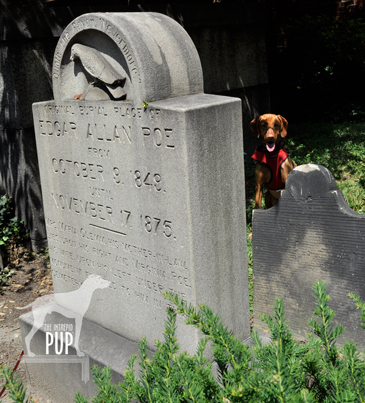
A raven marks the spot: Tavish lurks in the shadows behind the monument indicating where Edgar Allan Poe was originally interred.
As the literary master of the dark and dreary, Edgar Allan Poe (1809-1849) and his special brand of Gothic fiction tie in conveniently with the whole Halloween oeuvre. So, on this All Hallows’ Eve, allow Tavish the Intrepid Pup to take you on a virtual visit to Poe’s grave site in Maryland.
Several cities lay legitimate claims to Poe—Boston, New York, Richmond, and Philadelphia among them. Yet, it’s Baltimore where Poe not only lived with relatives in the early 1830s but also where he ultimately died under somewhat mysterious circumstances…turning what was to have been a brief stopover in October 1849 into an eternal one.
At the heart of downtown Baltimore and today encircled by the University of Maryland School of Law are the Westminster Hall Burying Grounds and Catacombs. Despite the name, these catacombs are nowhere near as creepy as the ones that figure in Poe’s own tale, The Cask of Amontillado. The burial grounds date to the late 1700s, and the 1852 church on the site—sans congregation—is now used for private event rentals.
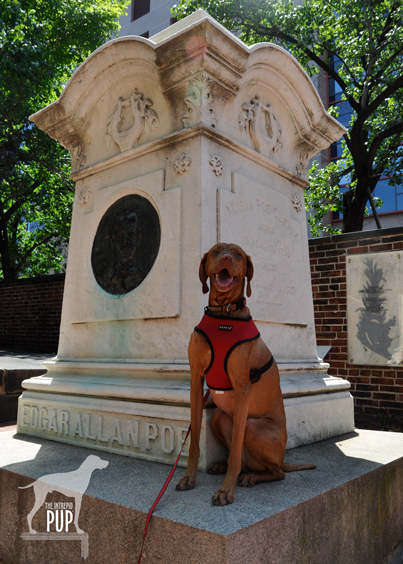
Poe’s final resting place at Westminster Hall Burying Grounds. There’s no Poe Toaster in sight…unless it’s the Intrepid Pup!?!
The cemetery is actually home to not one but two Poe memorials. Proceed to the rear of the cemetery to see Poe’s initial 1849 burial plot. While this grave never had a marker, you can’t miss the monument eventually placed there in 1913 depicting the haunting raven immortalized in Poe’s 1845 poem by the same name. On the afternoon of our visit it was particularly hot, and Tavish managed to plunk himself down in the only piece of shade, which happened to be right behind the stone and therefore created a bit of a spooky effect (see photo, right). As the marker’s accompanying inscription indicates, Poe was exhumed in November 1875 to be re-interred in a grave with his mother-in-law/aunt Maria Clemm (1790-1871) located near the cemetery’s entrance. A decade later, the remains of Poe’s young wife/cousin Virginia (1822-1847) were transported from New York and reunited with the others in the family plot. This marble monument (see photo, left) bears all three occupants’ names, as well as a large bas-relief of Poe’s likeness.
More than two centuries later, there’s still a morbid fascination with all things Poe, and perhaps nothing epitomizes this better than the anonymous soul (or souls?) known simply as the “Poe Toaster.” Beginning in 1949 on the anniversary of Poe’s birth—and continuing for 60 years!—a man would visit the monument in the dead of night to leave a half-full bottle of cognac and three red roses. A no-show on what would’ve been Poe’s 201st birthday heralded the end of this curious tradition, prompting local headlines to proclaim the Poe Toaster “nevermore.”
Dogging the Details
 39°17′23.25″N, 76°37′23.35″W Find it on the Intrepid Pup Map >
Westminster Hall Burying Grounds and Catacombs, Baltimore, Maryland
Literary history meets an easy bit of urban exploration to register a “1” on the Intrepid Pup wag-a-meter for this excursion.
The nearest parking garage is a block away at the Baltimore Grand (5 North Paca Street).
Upon arrival, take care in traversing the uneven brick walkways within the cemetery, and respect the grave markers. Westminster Hall offers seasonal, guided tours, but there’s a surprising amount of information to be found on various historical plaques throughout the grounds should you prefer to do a self-guided version. Spoiler alert: Poe is not the only famous historical figure buried here! Among others, look for the grave of James McHenry (1753-1816), the namesake of Baltimore’s Fort McHenry of Star Spangled Banner fame.
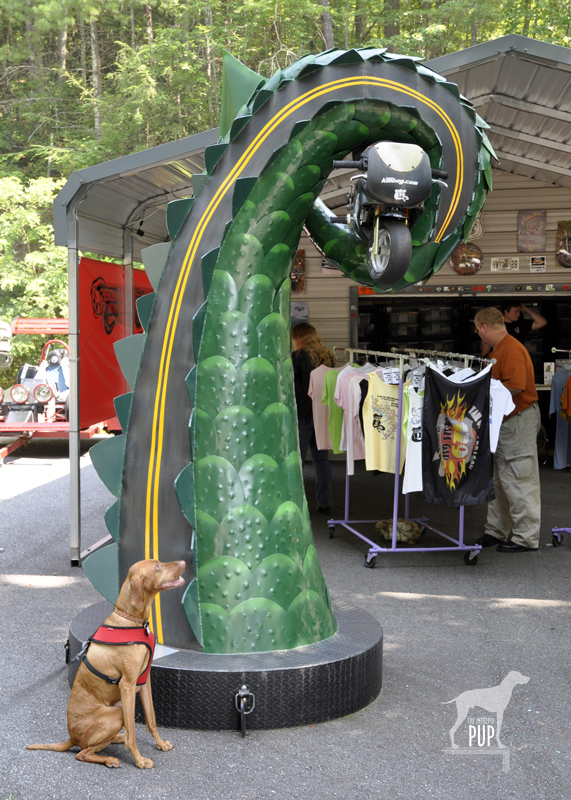

 There are two standouts in this spectacle. One is the signature green “tail” pictured above. The other is the Tree of Shame located in the motorcycle resort’s parking lot. This crowd-sourced totem is part whimsy, part rite-of-passage, and part cautionary tale. Basically it’s 20+ years of jetsam—smashed reflectors, blown tires, broken headlights, dented hubcaps, and shorn fenders—lobbed in frustration by those unlucky enough to have been “bitten by the dragon.” The tree is always in flux as pieces get added or otherwise shift among the branches (a nearby sign warns, “CAUTION: Watch for falling parts from Tree of Shame”). It’s also a good reminder that riding the Tail of the Dragon carries an inherent risk; over the past 12 years, there’s been an average of slightly more than two deaths a year.
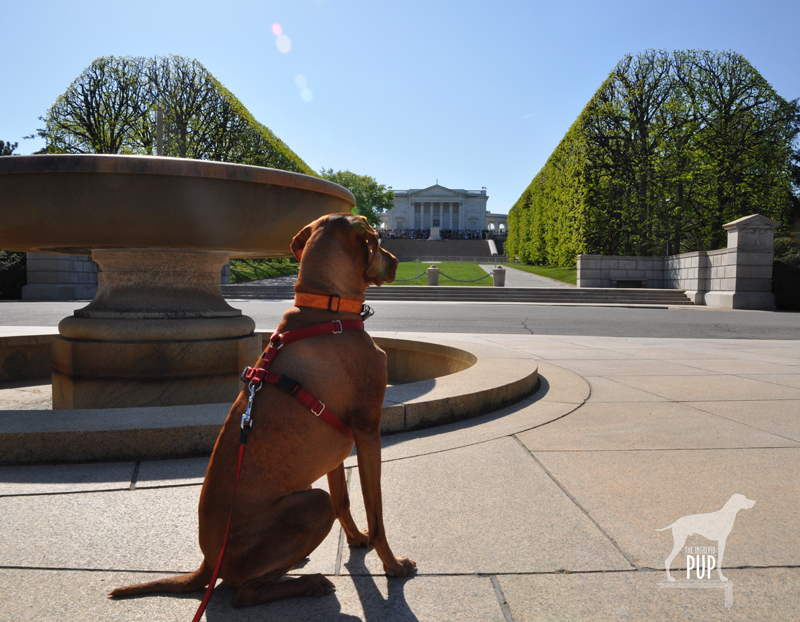


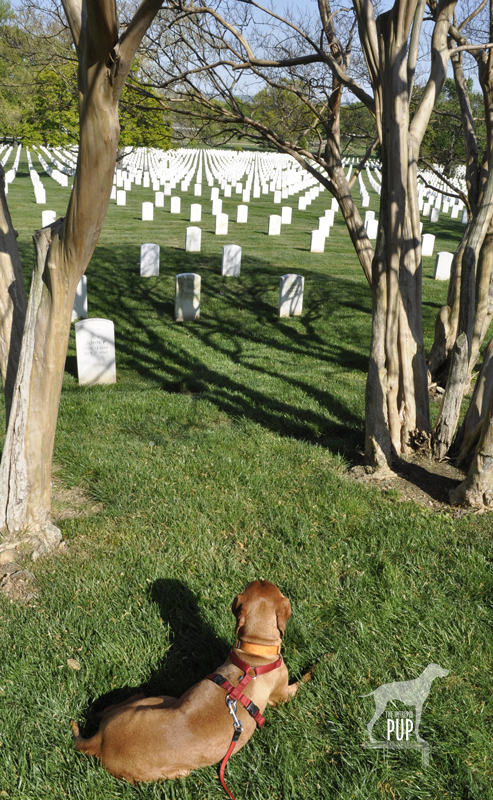 For as many times as we’ve visited Arlington National Cemetery over the years, it wasn’t until a friend and fellow dog owner recently mentioned it, that we were aware that leashed dogs are allowed on the grounds. Unless they’re service animals, they aren’t permitted in the visitor center buildings or inside Arlington House.
 With much public attention focused on what happens on Capitol Hill it’s easy to overlook that Washington, DC has a vibrant international scene. Amid the smörgåsbord of national associations, government agencies and multinational corporations are an astounding 176 official diplomatic missions. They’re all within northwest DC. While a few outliers are in Cathedral Heights, Penn Quarter or the U Street corridor, the vast majority are clustered on Embassy Row and in the Cleveland Park, Dupont Circle, Foggy Bottom, Georgetown, and Kalorama neighborhoods. The architecture of the chanceries and ambassadorial residences are as varied as the countries themselves. And while you might think that embassies and their staffs are cloistered entities, nothing could be further from the truth.
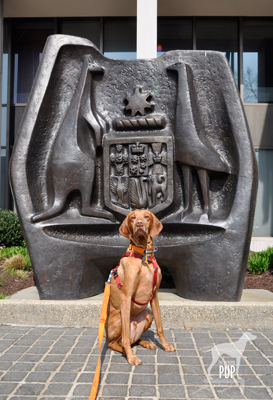

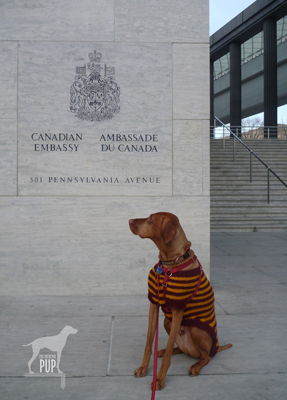
 38°56′32.20″N, 77°3′58.90″W
 38°56′32.30N,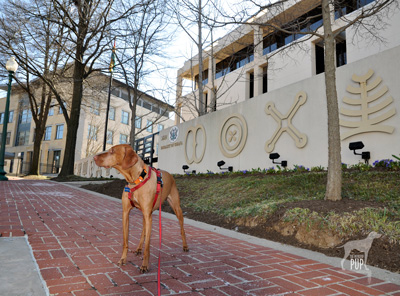


 38°56′23.10″N,

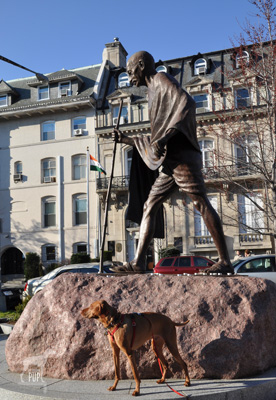
 38°54′4.08″N,

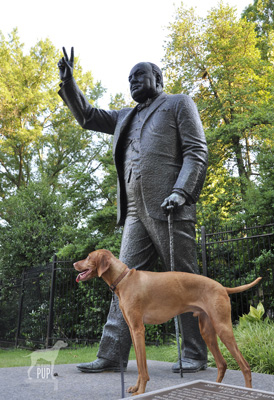
 38°54′5.15″N,
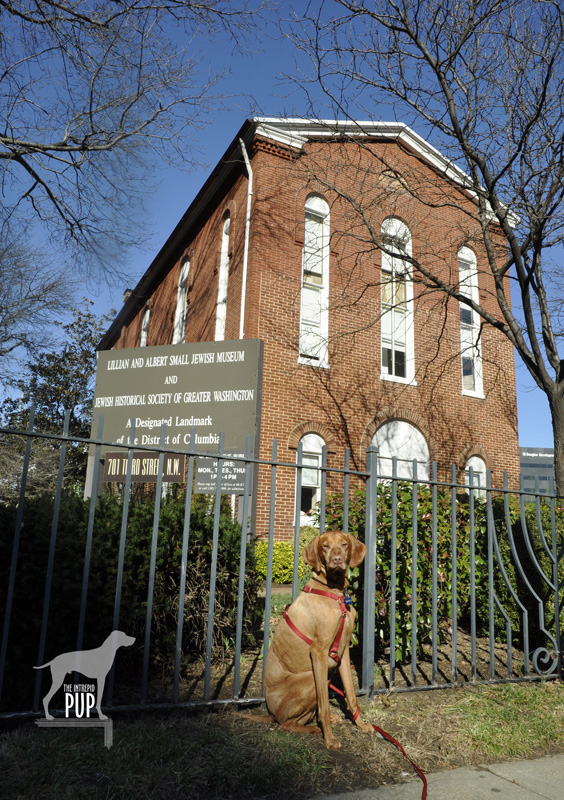 Now that the calendar has flipped to May, the national observance of